Gone by Sunday: What a No-Price Neighborhood Art Box Taught Me About My Own Work
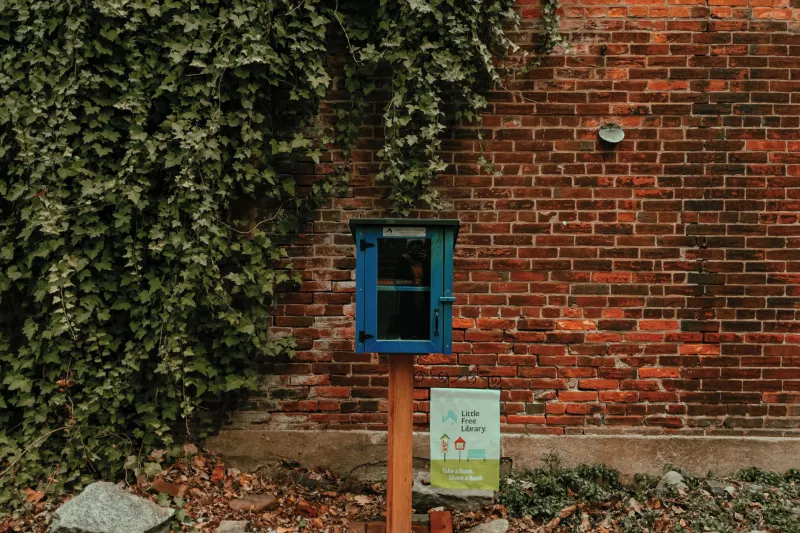
On the first Saturday in October, I borrowed a neighbor's Little Free Art Gallery, the glass-front box on a post that usually holds paperbacks, and turned it into a tiny, unstaffed ZZart Studio outpost. I stocked it with original 4-by-6 illustrations. No prices. No labels. No security camera. No guest book. Just a handwritten sign: Original art. Take one if it speaks to you. One per visitor, please.
I also kept a disappearance log in a cheap composition notebook from the drugstore. Every piece got a number on the back, a stocking date, and a short description. Then I waited, walked by too often, and wrote down what happened.
The Setup: A Gallery With No Cash Register
The box has two shelves, a plexiglass door, and a latch that sticks in humid weather. It is about four blocks from my apartment and roughly twelve steps from a bus stop. In other words, it is a terrible commercial gallery and a wonderful place to test a question I had been avoiding for months: what happens to my work when I stop standing next to it?
I stocked 30 pieces over four weeks. The mix was deliberate: ink and marker drawings, small acrylic studies, colored-pencil sketches, a few collage scraps. Some were polished. Some were weird. None were prints. I wanted the stakes to feel real, even if the price was zero.
I did not announce it on the neighborhood app. I told exactly one neighbor, who told exactly everyone. By week two, people were opening the latch like they expected something to jump out.
Week One: The Loud Stuff Left First
I stocked eight pieces on a Saturday morning. By Sunday evening, six were gone.
The first to disappear was a neon-green diner coffee cup with a lipstick print on the rim. Second was a dog in sunglasses. Third was a hot-pink gas station sign under a purple sky. The two left behind were a soft gray field and a beige house with a tiny blue door. They were fine pieces. They were also quiet, and the box is not a quiet place. It sits beside a stop sign and a trash can that gets more traffic than I expected.
That first week taught me something I already knew but had been ignoring: people take what they can recognize from across the street. Clarity is not the same as quality, but it is a huge part of being seen.
The Disappearance Log Gets Nosy
By the end of the month, 28 of the 30 pieces had left. The two remaining were the soft gray field and a very small pencil drawing of a fire hydrant. I am still thinking about that hydrant.
The log turned into a strange little diary. I noted weather, time of day, and whether the piece was on the top or bottom shelf. Top shelf vanished faster. So did anything with an animal, a face, or a color that could be spotted from a moving car. A tiny painting of a corner store went in three hours. A careful study of a cloudy sky lasted eleven days.
Neighbors left notes on sticky notes, receipt backs, and once, a napkin. One said: I took the dog because it looks like my dog. Another said: I needed the yellow one today. A third asked if it was really okay to take it. That note was the beginning of the pricing lesson.
The Pricing Lesson I Did Not Expect
No price tags did not make people relaxed. It made them suspicious. Several neighbors asked how much the pieces cost. When I said nothing, they asked if I was sure. One woman tried to hand me five dollars through the fence. A man asked if there was a catch, which is a fair question in a world where almost nothing is free without a funnel attached.
Zero dollars is not a neutral number. It is a message, and people hear it differently depending on their day. For some, free art felt like a gift. For others, it felt like a test. I started to understand that pricing is not just arithmetic. It is a signal about who the work is for and what kind of exchange you are proposing.
That does not mean I am about to slap a price sticker on every sketch. It means I am done pretending that money is the only awkward part of art. Generosity is a choice, not a business plan. I can give work away on purpose and still charge for commissions without apologizing for either.
What the Box Taught Me About Audience
My guess about the audience was wrong in a useful way. I assumed people wanted landscapes because landscapes are safe. They wanted punch, humor, and specificity. They wanted a tiny painting of a bus stop that looks like their bus stop. They wanted the dog in sunglasses. They wanted the thing that made them point before they thought.
The box also taught me that audience is not an abstract metric. It is a person walking a dog at 7:15 in the morning. It is a kid on a scooter who opens the latch with both hands. It is someone who has walked past the same post for years and finally looked inside. If I want to make work for people, I need to remember that people are not a demographic. They are neighbors with opinions and limited shelf space.
Letting Go Is a Skill You Practice
I would like to report that I felt purely generous every time a piece vanished. I did not. The first few disappearances felt like tiny losses. I had made those things. I knew where the pencil wobbled. I knew which corner I had fixed twice. Then, somewhere around week three, the notebook started to feel less like an inventory and more like a receipt for having shown up.
The box was a rehearsal for selling. It was also a rehearsal for not hoarding. Art has to leave the studio to have a life. A painting in a drawer is still a painting, but it is not doing any work in the world. The honor-system gallery made that obvious in the least sentimental way possible: if I wanted the work to reach people, I had to let them take it.
What I Would Do Differently Next Time
I would label the back of each piece with my name and the ZZart Studio site, because a few people genuinely wanted to know who made the weird little dog. I would stock fewer pieces each week, maybe six instead of eight, so the box felt curated rather than crowded. I would keep the log. I would keep the no-price rule for a handful of pieces, but I would add a small card explaining that commissions and prints are how I keep the lights on. No hard sell. Just honesty.
Mostly, I would do it again. The box on the corner is not a gallery in the fancy sense. It is a tiny, drafty, honor-system experiment. But for one month, it was the most honest audience I have had in years. Twenty-eight pieces left. Two stayed. And I am still writing down what that means.