Plastic Voters: I Cut 42 Campaign Signs Into Tiny Portraits and Let Their Colors Run the Show

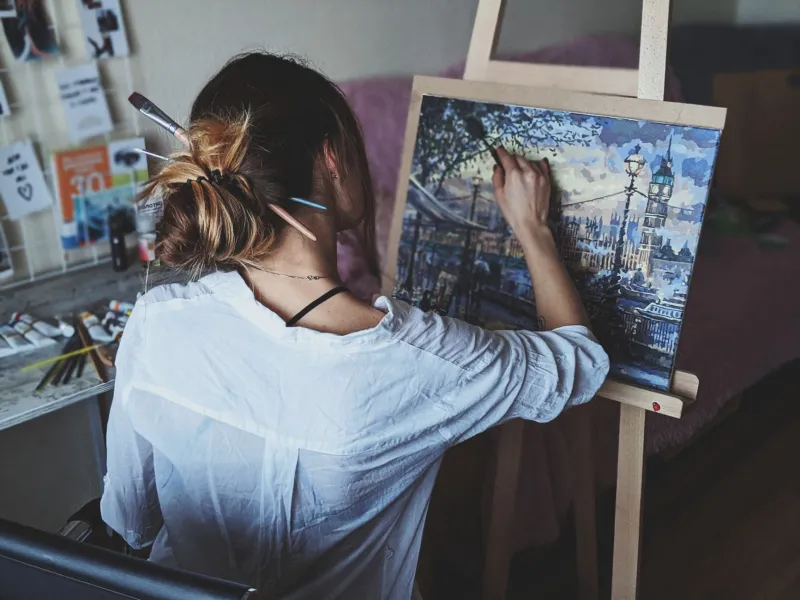
Photo by Photo by atelierbyvineeth ... on Unsplash on Unsplash
On the morning of November 4, 2026, my street looked like a parade had ended and nobody got the cleanup memo. Yard signs leaned at drunk angles in the grass, zip-tied to fences, face-down in the gutter. The midterms were over. The plastic was not. I had a box cutter, a free afternoon, and a bad idea that turned into a very good one: collect the abandoned signs and turn them into small portraits of the people who actually live here.
I want to be clear about the ground rules, because this is the part where art projects get weird. I only took signs that were already down or abandoned in the public right-of-way after Election Day. If a sign was still standing in someone's yard, I knocked and asked. I took signs from both parties, which meant my stack looked like a very confused civic pride parade. And I did not paint a single politician. The series is nonpartisan by design. I am not here to argue politics. I am here to argue about magenta.
The 42-Panel Haul
Corrugated plastic campaign signs are everywhere after an election, and they are a weirdly perfect art material if you are willing to fight them a little. They are lightweight, rigid enough for small panels, and free. The catch is the surface. Coroplast — the brand name most people use for that fluted plastic — is slick, waxy-feeling, and about as welcoming to paint as a windshield.
I cut the signs into rough six-by-six-inch squares with a box cutter and a metal ruler. Wear gloves. The corrugated edges are sharp and the plastic throws tiny shards when you score it. I cleaned each panel with dish soap and warm water, let them dry overnight, then scuffed the printed side with 220-grit sandpaper until the shine went cloudy. Two thin coats of acrylic gesso went on next, with a light sanding between coats. That prep is the whole ballgame. Skip it and your beautiful portrait will peel off in one sad sheet the first time someone picks it up.
Letting the Sign Pick the Palette
Here is the fun part. I did not prime the panels to blank white. I let the original sign colors stay visible at the edges and sometimes right through the first layer of paint. A blue-and-white sign became a portrait of our mail carrier, with the blue stripe turning into her jacket collar. A yellow-and-black sign became a schnauzer named Pickles, mostly because the yellow looked like a bad mood and Pickles has resting bad-mood face. A red-white-and-blue panel became a tiny painting of the guy two doors down who grows too many tomatoes and leaves them on everyone's porch.
The sign's original palette became a constraint, and constraints are the fastest way to make color decisions. When you are staring at a blue panel with a red stripe down one side, you stop asking, "What color should this be?" and start asking, "What can I do with what I already have?" That is a much more interesting question. I mixed titanium white into the leftover reds for skin tones. I used the blue as a shadow color instead of black. I left the white edges raw, because the plastic's own white was brighter than any tube white I own.
The Ghost Slogans
I sanded off the candidate names and slogans before painting, but the ghost text did not always disappear. Under two coats of gesso, you can still feel a raised letter here and there. On one panel, the word "FOR" survived as a faint bump under a portrait of a crossing guard. I decided to leave it. It felt honest. The signs were temporary, loud, and opinionated. The portraits are small, quiet, and nonpartisan. The plastic remembers what it used to be, and I like that the painting does not pretend otherwise.
Reactions From the Block
The first six portraits went up on a clothesline across my front porch, clipped with laundry pins. People slowed down. Then they stopped. Then they asked questions. The mail carrier wanted to know why her nose was blue. I explained that blue was the underpainting and the nose was not a political statement. She said she liked it. Pickles's owner asked if I could make Pickles look less judgmental. I said no.
The best reaction came from a kid on a scooter who stared at the clothesline for a full minute and then asked, "Are those signs going to vote again?" I said no, they are retired. He nodded like that was the correct answer and scooted away.
What Slick Plastic Teaches You
Painting on corrugated plastic is not like painting on canvas or wood. Acrylic adheres fine if you prep, but the surface does not absorb anything. Your brush sits on top of the panel instead of sinking in. That means thin layers, patience, and no aggressive scrubbing unless you want to lift everything back to bare plastic. I learned to build color in translucent washes and save the opaque highlights for last. I also learned to back each panel with a piece of foam core before painting, because a six-inch square of corrugated plastic has a mind of its own and will flex exactly when you do not want it to.
Would I do it again? Yes. The 2026 midterms gave me 42 free panels and a color palette I would never have chosen on my own. The signs were designed to be loud from a distance. Up close, cut into little squares, they became something else: bright, weird, and specifically local. The portraits are hanging in my hallway now, clipped to a wire, waiting for the next round of neighbors to ask why the dog is yellow. The answer is the same as it always is. The sign made me do it.