Small Paintings, Sharp Elbows: A Weekend at the Five-Dollar Art Table
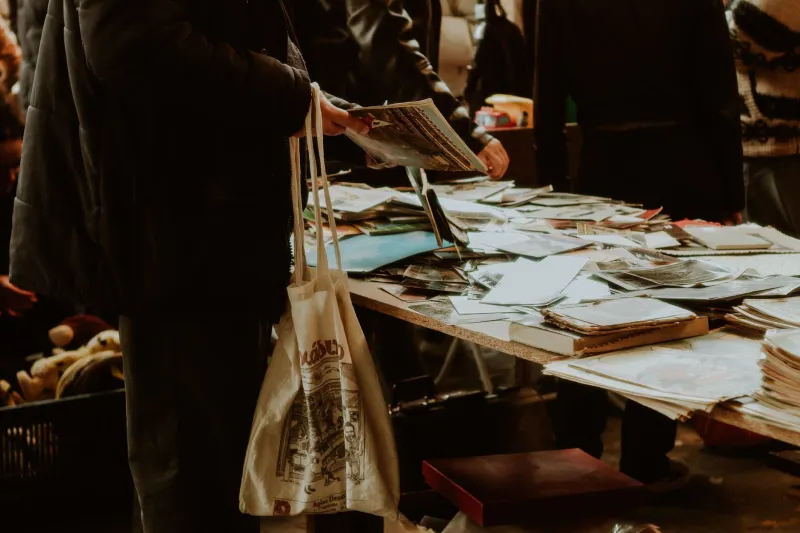
On a sticky Saturday morning in June 2026, I unfolded a card table in a flea market lot just outside Allentown, Pennsylvania, and arranged 100 original paintings the way you'd set out a plate of cookies: small, bright, and impossible to ignore. Each piece was five dollars. Not a print. Not a postcard. An actual tiny original, painted by me, with all the weird little brush marks still visible.
The plan was simple and slightly unhinged: could 100 five-dollar mini-paintings survive a US bargain-hunting crowd without turning into a sad pile of undervalued art? I wanted data. I also wanted to sell some paintings and eat a funnel cake. Only two of those goals were scientific.
The Setup: One Hundred Tiny Canvases, One Folding Table
At ZZart Studio, most of my work lives online: commissions, illustrations, the occasional bold-colored experiment that starts as a doodle and ends as somebody's birthday gift. A flea market is a different animal. People touch things. They squint. They ask if you can do better on the price before they've even said hello.
So I built a batch. I used 4-by-4-inch canvas boards, a limited palette of acrylics, and a production line that would make a very tidy robot weep with joy. Every morning for three weeks, I painted in sets of ten: one pass for backgrounds, one for shapes, one for the loud little details that make a tiny painting feel like a tiny painting and not a color swatch with delusions.
Not every piece was a masterpiece. Some were basically cheerful accidents. One looked like a pear that had seen too much. Another was a blue dog with an expression I can only describe as 'mid–existential crisis.' I gave them all simple titles, numbered them on the back, and packed them in shallow bakery boxes. The whole inventory fit in two tote bags, which felt suspiciously efficient.
The Display: Make It Look Like a Treasure Hunt, Not a Clearance Bin
The first version of my table looked like a yard sale had given up. Paintings flat on the table, a little sign, a cash box. People walked past like I was selling used HDMI cables. Then I propped everything upright on cheap wooden crates and a folding grid, grouped the pieces by color, and added a hand-painted sign: 'Original tiny paintings. $5. No two alike. Cash or card.'
Suddenly, the table had a pulse. The vertical display did most of the work. A grid of small, loud paintings reads as a collection, not a pile of leftovers. I also kept a few larger pieces at the end of the table priced at $20 and $30, mostly as anchors. They made the five-dollar pieces feel like a cheerful entry point instead of a distress signal.
One woman picked up a tiny landscape, turned it over, and said, 'This is original?' I said yes. She bought three. That was the first hint that the price was doing something complicated in people's heads.
The Haggling: Where Five Dollars Meets Firm Boundaries
I expected haggling. I did not expect haggling at five dollars. But flea markets are flea markets, and bargain energy is a contact sport.
A man offered me three dollars for two paintings and a used lottery ticket. I declined the ticket. Another person asked if I'd do four dollars for one if she bought a frame from the booth next door. I said the frame was a great idea but the painting was still five. One kid, maybe eight years old, asked very seriously if I could do a bulk discount on four. I said three for twelve, and he counted his money like a tiny accountant. That sale felt great.
Here's what I learned fast: if you price low, some people hear 'cheap' instead of 'accessible.' The fix wasn't getting defensive. It was being clear. I put a small sign under the bundles: '3 for $12. Singles $5. Yes, they're originals.' I also stopped saying 'I can do five' like I was apologizing. I started saying 'Five dollars, and it's yours.' Same number. Very different energy.
The Surprise Bestsellers
I thought the tiny landscapes would win. They did not. The first painting to sell was a smug lemon wearing sunglasses. Second was a chunky bee carrying a tiny purse. Third was a hot dog in a cowboy hat, which I had painted at 11 p.m. while questioning my life choices. By noon, the weird ones were gone and the tasteful little sunsets were sitting there like polite guests at a loud party.
Color mattered, too. Anything with hot pink, acid green, or a big ugly-beautiful orange moved faster than muted blues. Small faces sold. Tiny animals sold. Abstract color blocks sold, but only when I grouped them together so they looked like a set. A woman bought six of those and told me she was going to hang them in her laundry room. Perfect. Art belongs everywhere, including next to the dryer sheets.
What the Five-Dollar Table Actually Taught Me
The five-dollar price was not the value of the painting. It was the cost of entry. It let people who would never walk into a gallery try out the idea of owning original art. That's worth something. But it also taught me where the line is. I would not price my commissioned illustrations at flea market rates. I would not let a five-dollar experiment rewrite the whole studio's pricing sheet. The table was a test kitchen, not the main menu.
By Sunday afternoon, I had sold 73 paintings, traded one for a very good cinnamon roll, and given two to a kid who spent ten minutes deciding which one matched her bedroom. The remaining pieces came home with me. Some will go into future bundles. Some will become part of a bigger piece. None of them feel like failures.
A Practical Checklist for Your Own 2026 Low-Stakes Selling Experiment
- Pick a venue with foot traffic and a cheap table fee. A flea market, church craft fair, or neighborhood pop-up works. High rent kills the experiment.
- Batch-produce around one size and a limited palette. You want speed without decision fatigue.
- Set a floor price and a bundle price before you leave the house. Write them down. Tape them to the cash box.
- Make a sign that says 'original' and explains the price without apologizing for it.
- Display vertically at eye level. A grid beats a flat pile every time.
- Accept cash and card. A $10 card reader pays for itself in one afternoon.
- Track what sells by subject, color, and size. Your weird bestseller is data.
- Keep a few higher-priced pieces as anchors so the cheap work reads as an invitation, not a fire sale.
- Do not use the experiment to price your main portfolio. Learn from it, then leave it at the table.
- Bring snacks. Bargain hunters are relentless, and you will need a cinnamon roll.