Trade Me a Teapot: Twelve Tiny Paintings, One Coffee Shop Pegboard, and a Month of Extremely Odd Currency
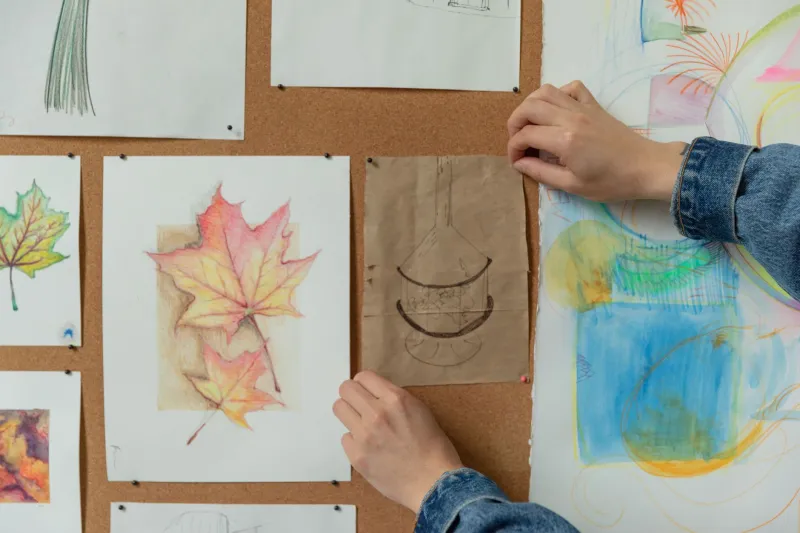
In October 2026, I taped a corkboard to the wall of a coffee shop that lets locals post dog-walker ads and lost-cat flyers. My sign was simple: Original 4-by-6 painting. Make me an offer. Objects preferred. No cash. I pinned twelve empty slots beside it, poured a drip coffee, and tried not to stare at the board like it owed me money.
The idea was not that money is bad. Rent is real. Art supplies are not free. But I wanted a month where the question was not What is this worth? It was What would you actually trade for it? That is a different conversation. Sometimes a better one. Sometimes a stranger hands you a bowling pin and you have to rethink your whole afternoon.
The Rules Were Mostly Vibes
I kept the rules loose because a barter board with fine print is just a sad contract. One painting per trade. The object had to fit in a tote bag. No cash, no gift cards, no I’ll Venmo you later. I reserved the right to say no to anything that felt like a prank, a biohazard, or a future court date. Otherwise, the offer was the offer.
What I did not expect was how quickly the board turned into a tiny neighborhood newspaper. People stood in front of it and argued. One guy offered a single roller skate. His friend said that was a bad deal. A barista offered a bag of lemons and then immediately regretted it. By day three, someone had drawn a little crown above my sign in pencil. I still do not know who.
The Teapot That Set the Tone
The first real trade was a chipped teapot with a hairline crack near the spout. The woman who brought it said it had belonged to her grandmother, then to her mother, then to a shelf above her washing machine. It poured badly. She kept it anyway. I painted a tiny kitchen window with morning light hitting a teacup, and she cried a little, which was not in my original business plan.
That trade taught me the month’s first lesson: an object does not have to be valuable to be loaded. The teapot was not worth much on paper. It was worth a lot in a kitchen. I started asking people why they were offering what they were offering, and the answers became half the project.
The Button Box and the Bowling Pin
Trade two was a shoebox of mismatched buttons from a retired seamstress. She said she had been collecting them since the 1970s and had no plan. I painted a pile of buttons as if they were jewels, all bright plastic and crooked holes. She laughed and said, Finally, someone respects the inventory.
Trade three was a signed bowling pin. Yes, really. A man named Big Al had won a league championship in 1989, and the pin had a faded signature and a sticker that said Good Luck, Al. I painted it in neon orange against a purple background because subtlety felt wrong. He told me the story three times. I did not mind. The pin now leans against my studio wall like a very shiny, very useless award.
The Middle Trades Got Weird in a Good Way
By the second week, the board had a reputation. Someone traded a ceramic frog with one eye painted shut. Someone else offered a cassette tape labeled Road Trip Songs, Do Not Erase and then looked at me like I might steal his memories. I traded a tiny painting of a cassette with the tape pulled out in a perfect loop. He nodded once and walked away. I respect that.
There was a bag of good screws, which turned out to mean screws sorted by size in a Ziploc bag. There was a hotel keycard from a place that no longer existed. There was a single oven mitt shaped like a lobster. I painted the lobster mitt like a Renaissance portrait. It deserved it.
Not every trade was poetic. One person offered a half-used candle. I passed. Another offered a stack of expired coupons. I passed harder. The board made saying no easier because the terms were clear: this is a trade, not a charity, not a test, not a discount bin.
The Trade I Almost Refused
A woman brought in a small wooden chair, the kind that might belong to a doll or a very determined squirrel. She said it had been in her family for years, and no one knew why. It was wobbly. It had a tiny heart carved into the seat. I almost said no because I could not figure out what to paint.
Then I realized the chair was the painting. I drew it empty, giant, sitting in a field like a monument to something no one could name. She looked at it for a long time and said, That is exactly what it feels like. I do not know what she meant. I do know that was the best trade of the month.
The Ledger, If You Can Call It That
Here is the full list, because I am a person who loves a tidy table:
| Trade | Object | Tiny painting |
|---|---|---|
| 1 | Chipped teapot | Kitchen window at 7 a.m. |
| 2 | Box of mismatched buttons | Buttons as jewels |
| 3 | Signed bowling pin | Neon pin on purple |
| 4 | Ceramic frog with one eye | Frog in a business suit |
| 5 | Cassette labeled Road Trip Songs | Tangled tape loop |
| 6 | Bag of good screws | Screws arranged like a constellation |
| 7 | Old hotel keycard | Keycard as a postcard from nowhere |
| 8 | Lobster oven mitt | Renaissance lobster portrait |
| 9 | Tiny wooden chair | Empty chair in a field |
| 10 | Jar of sea glass | Glass on a windowsill |
| 11 | Cookbook with handwritten notes | Spaghetti stain as a sun |
| 12 | Windshield ice scraper | Scraper in a snow globe |
What Bartering Taught Me About Pricing
I am not going to pretend bartering pays the electric bill. It does not. But it did something pricing sometimes cannot: it forced me to talk to people about why they wanted art in the first place. A price tag says This is what it costs. A barter board says What is this worth to you? Those are not the same question.
It also made commissions feel less mysterious. When someone offers you a chipped teapot, you learn quickly whether they are serious, sentimental, or just cleaning out a closet. That is useful. Client emails are often the same information in nicer language. The barter board was a crash course in reading the offer behind the offer.
Mostly, it got the work out of the studio. Twelve small paintings left my desk and went home with people who had weird objects and good stories. Some of those objects are now in my studio. The teapot holds brushes. The bowling pin holds the door. The tiny chair holds a very small, very wobbly sense of purpose.
The Board Comes Down
On the last day, the coffee shop owner asked if I wanted to leave the corkboard up. I said no. A month was enough. But I did leave one note in the corner: Trades open again when the teapot runs out of stories. It has not run out yet.